Sewer Line Repair in Longwood, Bronx
Persistent sewage backups, foul odors rising from basement cleanouts, and water bubbling around cellar foundation walls require deep camera investigation. We diagnose and repair private main sewer lines connecting Longwood properties to the municipal main.
Diagnosing Main Sewer Backups in Longwood, Bronx
When dealing with sewer line repair Longwood Bronx property owners must navigate complex municipal regulations alongside aging subterranean infrastructure. In many Bronx brownstones and multi-family buildings, building sewers constructed from extra-heavy cast iron or vitrified clay tile have been buried underground for over eight decades.
Over time, ground settlement along busy thoroughfares like Southern Boulevard and Westchester Avenue causes underground pipes to shear, belly, or separate. Mature street trees send fine root filaments through pipe joints, creating massive root balls that trap solids and generate recurring sewer backup repair Longwood Bronx emergencies.
Our diagnostic crew performs comprehensive sewer camera inspection Longwood Bronx surveys. By feeding self-leveling fiber-optic cameras directly through your cellar house trap, we assess structural pipe integrity and depth without speculative excavation.
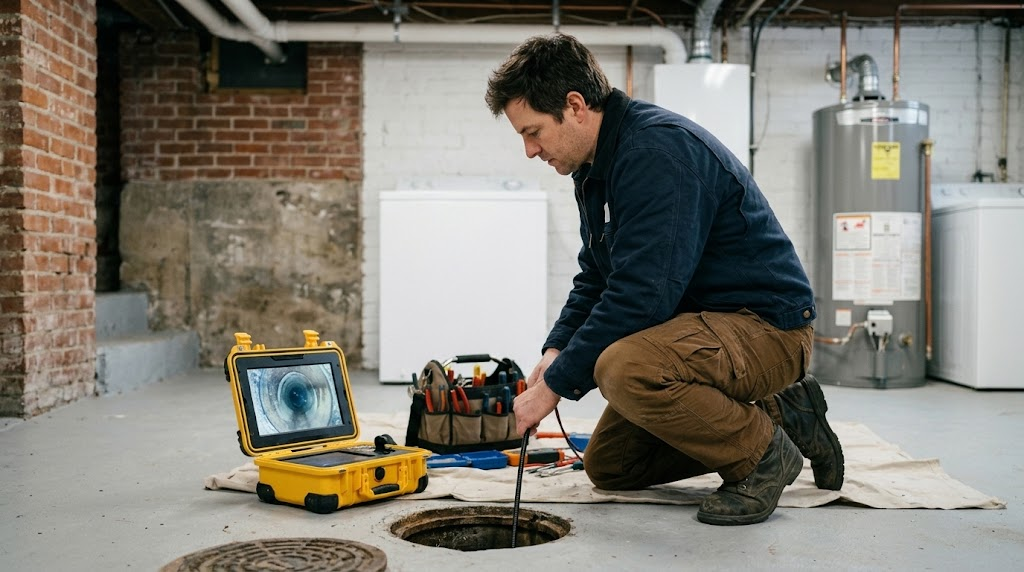
High-definition camera transmitters pinpointing pipe depth, cracks, root intrusion, and sewer sags beneath sidewalks and roadways.
Critical Symptoms of a Damaged Sewer Line
Main sewer failures endanger building foundations and present severe health hazards. Pay attention to these primary indicators:
Basement Floor Drain Flooding
Whenever upper apartments flush toilets or run laundry, dark raw sewage and black sludge backing up through cellar drains indicates a total main line blockage.
Sewer Gas Odors in Cellar
Rotten egg or methane odors near the front foundation wall usually stem from cracked brass cleanout caps on the house trap or broken earthen sewer tile.
Sidewalk Sinks or Yard Depressions
A sinking concrete flagstone in front of your brownstone or soggy soil in the front yard indicates escaping sewage is washing away subterranean bedding gravel.
The Main Sewer Assessment Process
Addressing main line problems requires systematic inspection before recommending costly trenching or street openings.
House Trap Access
We remove the building-side and street-side cleanout ferrules on the main house trap to evaluate water head pressure and ventilation flow.
HD Video Inspection
A rigid push rod camera travels through the line to the city spur, recording footage of cracks, displaced joints, root intrusions, or collapsed crowns.
Digital Sonde Locating
An electromagnetic sonde beacon in the camera head allows technicians above ground to trace the exact depth and physical location of damaged pipe sections.
Targeted Repair / Renewal
Depending on pipe depth and fracture extent, we execute localized point repairs or coordinate full extra-heavy cast-iron replacement with NYC DEP permits.
Property Owner Responsibility & NYC DEP Rules
In New York City, property owners frequently believe that sewer piping outside their property line is maintained by the municipality. Under NYC Department of Environmental Protection (DEP) regulations, property owners are responsible for the entire private house sewer line all the way to its connection at the city sewer main in the middle of the street.
When a sewer collapse occurs under the sidewalk or public roadway, repairing the line requires specialized permits from the NYC Department of Transportation (DOT) and DEP, street opening bonds, trench shoring, and mandatory inspections by city plumbing inspectors.
Our team clarifies exact boundary responsibilities, reviews DEP notices (such as 3-Day or 10-Day Sewer Defect notices), and coordinates code-compliant restoration with proper heavy-gauge cast iron or approved ductile piping.
Spot Repair vs. Complete Replacement
If camera footage shows that damage is confined to a single localized pipe joint or shifted ferrule near the foundation wall, a surgical point repair is often suitable.
However, when vitrified clay tile exhibits pervasive longitudinal cracks, chronic bellies, or severe structural deterioration across its entire run beneath the sidewalk, spot repairs only shift future clogs downstream. A complete sewer line replacement provides lasting peace of mind.
Related Underground & Waste Line Services
Main sewer integrity is closely tied to supply lines, building traps, and high-volume drainage systems across Longwood.
Mechanical Drain Cleaning
High-torque snaking and hydro jetting to clear heavy grease blockages, sludge, and hair from interior building waste stacks and branches.
Drain Cleaning ServicesWater Service Line Repair
Investigating private underground water supply line leaks, municipal tap connections, and low pressure entering Longwood cellars.
Water Supply DiagnosticsConcealed Leak Detection
Acoustic and thermal detection to confirm whether unexplained basement moisture stems from sewer backflow or pressurized water supply breaks.
Leak Detection ServicesFrequently Asked Questions About Sewer Line Repair
Practical guidance on camera inspections, DEP requirements, and main sewer line restoration in Longwood.
Under New York City Department of Environmental Protection (NYC DEP) rules, the property owner is generally responsible for the entire length of the private house sewer line, from inside the cellar out to the spur connection at the municipal public sewer in the roadway, including any required street excavation and sidewalk permits.
A self-leveling color fiber-optic camera with high-intensity LED lighting and a digital radio sonde transmitter is inserted through the building's house trap. The monitor records exact distance footages, displaying offset joints, crushing damage, bellies (sags), root intrusion, or pipe deterioration in real time.
The double-vent house trap forms a water barrier that blocks toxic, flammable sewer gases from entering the cellar from the municipal sewer. The fresh air inlet pipe extends outdoors to provide air circulation, preventing siphonage of fixture traps throughout the building.
Mechanical root augers provide immediate temporary relief by cutting hair roots. However, once roots breach clay or cast-iron pipe joints, they regrow aggressively and expand the fracture. Permanent resolution requires localized point repair or complete service line replacement.
Dealing With a Sewer Line Emergency in Longwood?
Prevent hazardous blackwater backups from spreading contamination through your building. Call our sewer diagnostic team for prompt telephone assessment.